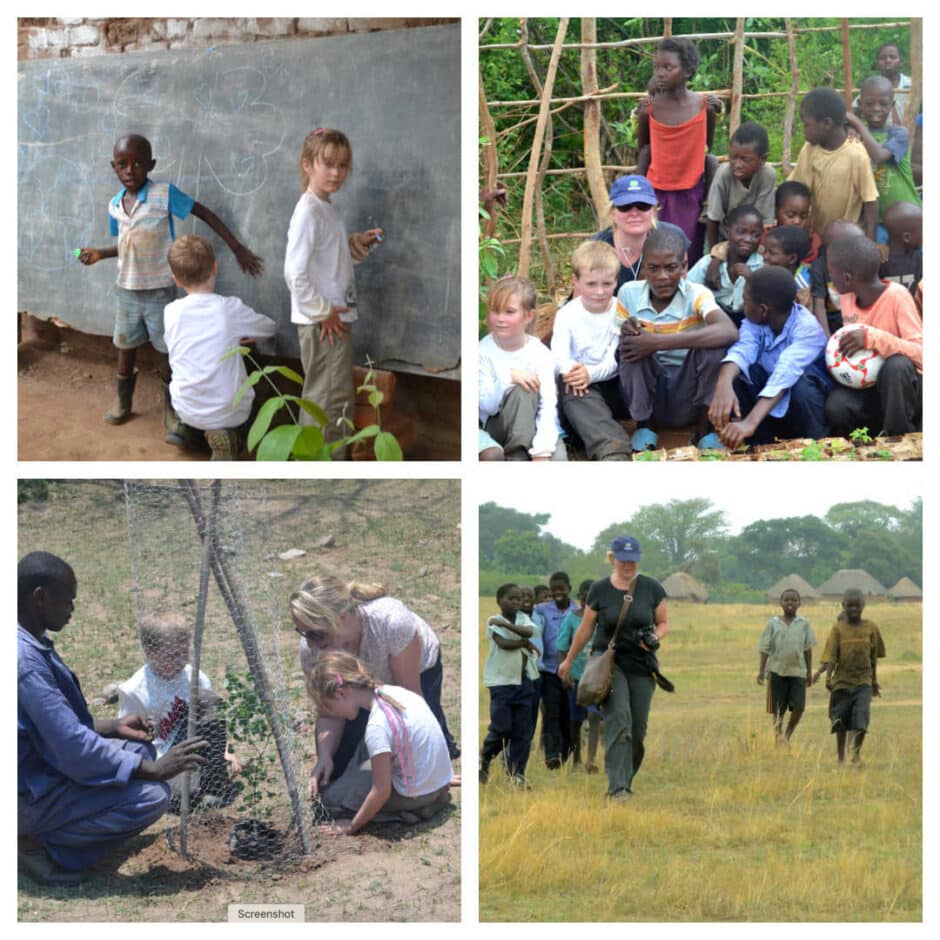
In conversations about climate change, we often focus on large-scale solutions—renewable energy, international agreements, and technological innovation. These are essential. But there is another powerful place where climate understanding begins: with a child and a tree.
At The ChariTree Foundation, we believe that sometimes the most meaningful environmental education starts with something very simple: one tree.
“For many children, a tree may be their first teacher about climate and ecosystems.”
— Andrea Koehle Jones, Founder, The ChariTree Foundation
A single tree can become a living classroom. Through observing a tree, children can begin to understand how natural systems work. They can see how trees store carbon, provide shade that cools the air, support birds and insects, stabilize soil, and change through the seasons. Concepts like biodiversity, ecosystems, and climate regulation—often taught abstractly in textbooks—become visible and tangible.
For many children, a tree may be their first teacher about climate and ecosystems.
But the learning becomes even more powerful when children do more than observe a tree—they plant one.
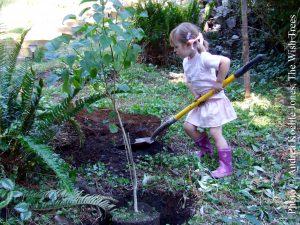
Planting and caring for a native tree is a hands-on experience that connects children directly to the living world. When children place a young tree in the soil, water it, and watch it grow over time, they begin to understand that ecosystems are not just something we study—they are something we care for.
A native tree also introduces children to the idea of place. Native species support local biodiversity, providing food and habitat for insects, birds, and other wildlife that share the ecosystem. As children care for that tree, they begin to notice these relationships: the pollinators that visit, the shade that spreads, the seasonal changes that mark time.
Through that process, climate education becomes something tangible and hopeful. Children see that their actions—however small—can contribute to the health of the environment around them.
This kind of learning is especially important today because childhood itself has changed. Children are growing up in a world increasingly shaped by screens—social media, video games, constant browsing, and emerging technologies like artificial intelligence. While digital tools offer incredible opportunities for learning, they also mean that many children spend less time outdoors and less time developing direct relationships with the natural world.
At the same time, children are exposed to an overwhelming stream of information about environmental crises. News about climate change, biodiversity loss, and extreme weather reaches them through digital platforms every day. For many young people, this can create feelings of anxiety, worry, and helplessness.
Environmental education can help transform that experience.
When children spend time learning from nature—observing a tree, planting one, or caring for a green space—they move from anxiety to agency. Instead of only hearing about environmental problems, they begin to see how ecosystems function and how people can participate in protecting them.
This shift is powerful.
Nature-based learning also supports children’s physical and mental wellbeing. Time spent outdoors encourages movement, improves attention, reduces stress, and strengthens emotional resilience. In an increasingly digital world, reconnecting children with the living world is not only an environmental priority—it is also a public health priority.
That is why we believe climate education should begin close to home.
Children do not need to travel to distant rainforests or melting glaciers to understand climate systems. They can begin with the ecosystems around them: the trees in their schoolyards, parks, and neighborhoods. These local environments allow children to observe ecological relationships over time and develop a sense of care and responsibility for the living systems that sustain their communities.
Because environmental stewardship rarely begins with information alone.
It begins with relationship.
People are far more likely to protect what they feel connected to. For many of us, that connection begins in childhood—with the places we played, the forests we explored, or even a single tree we watched grow.
“I want to give children opportunities to fall in love with nature because you protect what you love.”
— Andrea Koehle Jones, Founder, The ChariTree Foundation
If we want future generations to care for forests, biodiversity, and the climate, we must help them build those relationships early.
One tree can spark curiosity.
One tree can teach ecological systems.
One tree can inspire stewardship.
In a world increasingly defined by digital experiences, helping children reconnect with the living world may be one of the most powerful forms of climate education we have.
And sometimes, it begins with just one tree.